Adelaide University researchers have found implementing artificial intelligence and machine learning in canola fields and vineyards can help farmers make better decisions for the health of their crops.
Professor Volker Hessel, from Adelaide University’s School of Chemical Engineering, worked with growers in South Australia and Victoria to see how AI-driven personal assistants could support improved decision-making, more efficient resource management and enhanced agricultural productivity.
The research team worked alongside winemakers Serafino Wines, in South Australia’s McLaren Vale, and Victorian canola growers Perennial Pasture Systems.
“The cultivation of canola and grapevine faces dual pressures from future climate extremes and pollution linked to disease treatments, which may accelerate pathogen development and harm canola and wine production,” said Professor Hessel, who is the program lead in the ARC Centre of Excellence Plants for Space and Priority Lead – Pollution at Adelaide University’s Environment Institute.
“Disease losses in the Australian canola industry already reach $131 million annually, representing 27 per cent of gross value, while pests across six major grain crops cause $360m in losses, with potential to escalate to $2 billion.
“Similarly, the three most significant grapevine diseases – powdery mildew, downy mildew and Botrytis, also known as bunch rot – cost the Australian wine industry up to $300m annually.”
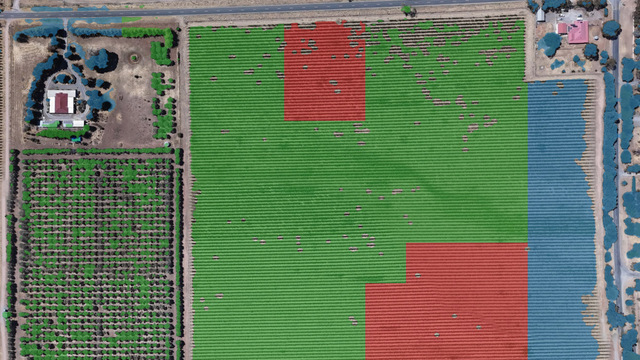
At Serafino, Prof Hessel’s project deployed canopy-weighted false-colour vegetation mapping by drones, from project partner Constellation Technologies, and deep-learning-based disease-risk mapping to enable regular, accurate assessments of vine health.
This information supported timely interventions to prevent the onset of common diseases that threaten grape quality and ultimately, wine production.
A governance flow tool, co-developed with Sydney-based XMPro, teams up ‘humanoid agents’ in discourse to conduct decision-making, creating an autonomous Digital Twin whose watchful presence frees the farmer to complete other tasks.
“These digital innovations empower farmers and vineyard managers to improve canola farm and vineyard performance, and also strengthen education and training pathways – equipping the next generation of agricultural professionals with cutting-edge digital skills,” Prof Hessel said.
“Together, Digital Twins and AI are shaping the next chapter of Australian agriculture and viticulture, advancing the industry toward a new era often described as ‘Agriculture 4.0’.”
The results of Prof Hessel’s project, titled Digital Twins in Agriculture: Virtual Farming for Enhancing Crop Health, Productivity, and Sustainability, have not yet been published, but were presented at a workshop on Tuesday 17 February at Adelaide University.