Water security, a lack of important local services and infrastructure, and support for new and young farmers continue to be the biggest issues identified by Eyre Peninsula farmers, according to a survey.
All landholders across Eyre Peninsula with properties more than 10 hectares were invited to participate in the survey in 2024 as part of a national Soil CRC project, funded by the Soil CRC, Ag Innovation & Research Eyre Peninsula (AIR EP) and Eyre Peninsula Landscape Board.
Almost one-third responded, with data from 432 landholders giving a clear picture of the demographics, challenges and aspirations of landholders in the region.
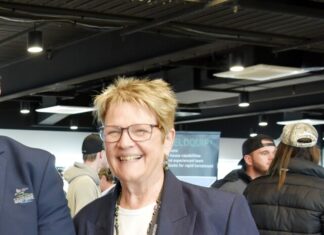
AIR EP executive officer Naomi Scholz said the data was invaluable in helping understand the issues, opportunities and needs facing the region’s farmers and rural communities.
“The survey results give us a clear insight into the challenges farmers are facing and where they see the need for support,” Ms Scholz said.
“This allows us to tailor the work we’re doing in the research, development and extension space to meet those needs. It also helps us better understand the values and beliefs our farmers hold about bigger factors such as risk, the climate and organisational trust.
“That’s critical in shaping how we can more effectively connect and work with our producers.”
Water security was again the top issue for all landholders responding to the survey (86 per cent of respondents for 2024, up from 81 per cent when the survey was last conducted in 2020).
This was closely followed by an absence of important services and sufficient infrastructure such as phone connectivity, schools, internet access and childcare at 85 per cent (up from 79 per cent in 2020), along with the availability/cost of water for livestock (81 per cent) and support for new and young farmers (79 per cent).
A total of 73 per cent of respondents also identified declining soil health and/or productivity as a new top five key issue.
“Dry conditions over recent years have kept water security at the forefront of farmers’ minds,” Ms Scholz said.
“As with many rural communities, there are also ongoing concerns about access to services. Mobile phone coverage and reliable internet access can be challenging in our more isolated farming communities.
“Options are also limited for schooling and childcare – and often families have to travel large distances to access these.”
Ms Scholz said the challenge now was to use the data to fine-tune research, programs, education and support.
“Areas like supporting new and young farmers, and finding ways to address declining soil health and productivity, are things we’re already working on and we’re keen to extend those efforts into the future.”
Succession planning was also identified as an important issue, with 80 per cent of farmers responding to the survey envisioning ownership of their property staying in the family – yet only 53 per cent said they had family members who had expressed an interest in taking over the farm.
“Succession planning can be a difficult topic to work through – but having a plan in place to navigate leadership changeovers is essential where there are multiple generations working together on a farm,” Ms Scholz said.
“Understanding who’s interested in carrying on the farm and who isn’t is an important first step. We encourage anyone who hasn’t had that discussion yet to do so, and to take measures to get that succession plan in place.
“Encouragingly, of our farmers whose family had agreed to a succession plan, 53 per cent were already in the process of creating that detailed plan.”
The survey also asked rural landholders – from full-time farmers through to non-farmers – what values they associated with their properties.
All farmers identified the ability to pass on a healthier environment for future generations as their top value.
Full-time farmers also said their farms were an important source of household income, and that having a healthy landscape that grows food of the highest quality was also important.
“While making a living from the land is a priority for farmers, it’s closely linked to a deep respect for the land they farm and the surrounding environment,” Ms Scholz said.
“There’s a real sense among rural landholders that the health of the land is important, not just for its productivity, but also for its environmental value.
“Producers understand that the two go hand-in-hand – you can’t have a productive farm without a healthy landscape.”
The survey also identified EP farmers’ openness to new ideas about farming and land management (87 per cent of full-time farmers, 91 per cent of part-time farmers and 85 per cent of hobby farmers), along with an expectation that landholders should manage their properties in expectation of a highly variable climate.
“It’s encouraging to see so many of our producers are open to new ideas, and that’s certainly something we find through the work we do with our research, development, workshops and events,” Ms Scholz said.
“There’s a real sense of curiosity among farmers looking for new techniques, technologies and targeted approaches to combat local challenges such as low rainfall and soil health.
“We look forward to continuing to work with EP farmers to bring new ideas to our region in the hope they’ll help to boost productivity and farm management.”