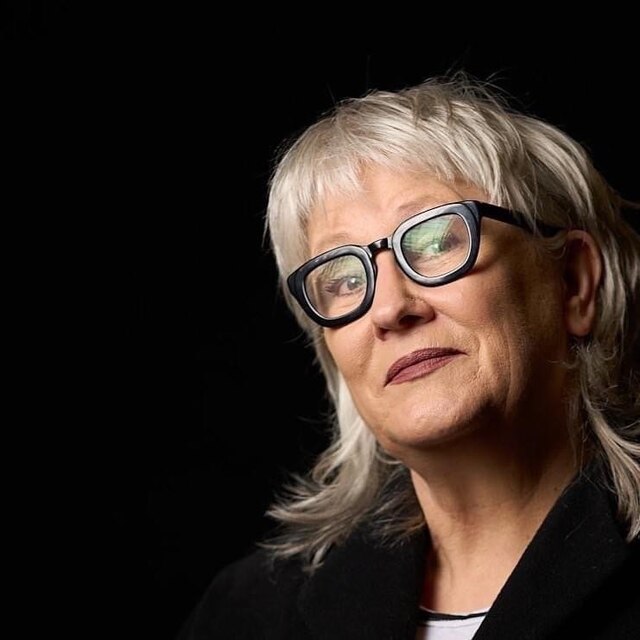
When Janine Hendry tweeted on social media her outrage about sexual violence and behaviour on February 25, 2021, little did she know the activation of people around Australia that would follow.
As the founder and director of Women’s March4Justice, Janine Hendry has continued to educate, support and advocate for what she believes is the major key to ending gender violence – gender equality.
“Imagine, I’m standing in front of you and in my hand is a bottle of elixir,“ Janine said.
“An elixir that would give you greater health, greater wealth and greater happiness. Do you think they’d be a queue from Adelaide to Alice all vying for a drop of this elixir? You bet there would be.
“But here’s the thing, we already have this elixir, it’s not something new and better still we know exactly what the ingredients are. It’s called equality.”
Janine shares equality is the key to everything we value, it underpins our health, our wealth and also our happiness. On the other side, inequality is the underlying condition of so much in our communities that causes pain and suffering.
It is what fractures families and divides communities. Inequality is also the underlying cause of violence against women.
“In Australia almost two women a week are murdered by men. Men known to them, men with whom they should have been safe,” Janine said.
“The number of women murdered by men masques the numbers of women who are hospitalized or left homeless because of violence perpetrated against them. This affects all of us as well as the communities in which we live.”
With the Royal Commission into Family, Domestic and Sexual Violence now under way in South Australia, Janine said abuse of women was always all about power.
“This perception of power comes from ingrained beliefs that men are somehow worth more, it’s how boys are raised and how society treats them,” she said.
One of the misconceptions in our communities is domestic violence is just physical.
“Remember too that abuse is not always physical, it can be controlling what a woman does or who she spends time with, it can be controlling money, including the non-payment of child support, or imposing values such telling a woman who to worship or what she can wear,” Janine said.
“Violence can be triggered by alcohol, by gambling, by poverty and by pornography, but the underlying cause is always inequality, and the conditions of inequality are power.”
In her work at Women’s March4Justice, Janine advocates for change wherever federal or state law considers. With the Royal Commission in South Australia, headed by Commissioner Natasha Stott Despoja now visiting regional areas for consultation, Janine encourages everyone to participate and contribute.
Doing so will ensure a full and informed feedback process from which to make strong and actionable recommendations for change.
“What is confounding is that in Australia equality is enshrined in law. There are laws determining equal pay provisions, there are laws prohibiting the discrimination against women. Yet it is in defiance of the legislative framework that the abuse of women continues,” Janine said.
“The question that we must ask ourselves is why is violence against women endemic in Australia? There are a number of things at play here. The first is how we talk about women.”
There are many examples, often times subtle, that it is important to be aware of and to educate on so as to become part of the overall solution.
“The small putdowns, the sexist jokes. It’s so easy to make a joke and when it doesn’t go down well, suggest ‘you can’t take a joke’,” Janine said.
“Here’s the thing, each subtle joke that denigrates a woman, that puts her down, that sidelines her is actually all about making the person telling that joke feel a little but superior.
“We make these jokes to the detriment of someone else and that reinforces the inequality gap.”
Janine shared inequality was reinforced because women still do 80 per cent of all domestic chores.
“I often wonder how it ever became a thing that someone assumed that women were better at laundry and vacuuming and child care and food preparation,” she said.
“Maybe we are better but only because we do more of it. There is no housework gene.”
Considering how women are represented in the broader community and in workplaces is another key towards solutions.
“When women don’t have a seat at the table where decisions are being made, women’s views can not be seen as being important,” Janine said.
However, Janine is quick to point out that there are things we can all do that will bring us closer to tasting that ‘elixir’ she speaks of. “Because if we do nothing then it’s going to take us over 300 years to get there. We can model great behaviour,” she said.
“We can teach both our sons and our daughters what equality looks like. We can ask the Board of our local sporting club why their Board representation is not balanced.
“We can check for diversity. Does everyone that needs to be represented have a seat at the table? We can take a stand and refuse to participate in an event unless there is equal representation? We can stand up and call out bad behaviour.
“The ‘it’s just a joke’ trope doesn’t cut it anymore.”
When it comes to being informed and educated on how inequality contributes to the rise of domestic violence, Janine adds, “inequality benefits those who hold power, equality benefits us all.
“Equality is a goal worth striving for because we’re all better off, and who doesn’t want that?”